Colombia's January 1 Reset: Why It Doesn't Reset the 183-Day Tax Count
Quinn Moran · Published
No. Colombia's 180-day immigration cap for visa-exempt visitors counts per calendar year and resets every January 1. The tax residency line, more than 183 days of presence in any 365-day period, has no reset date. A stay of 180 days at the end of one year followed by 180 days at the start of the next stays within the immigration cap in both years, but it passes 183 days in 365 during the first week of January.
On this page
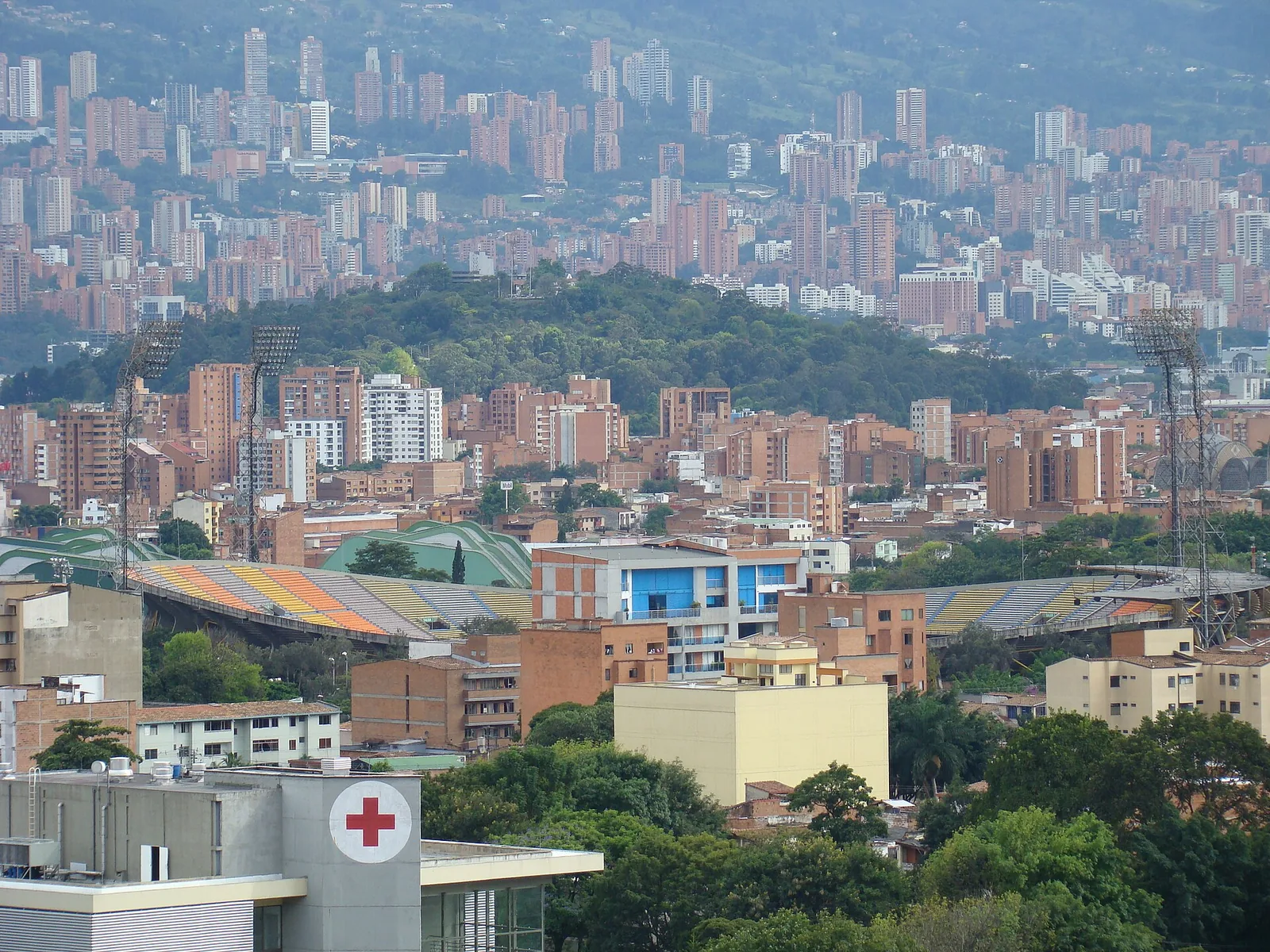
Colombia counts the same days twice, using two different windows. The immigration cap for visa-exempt visitors is 180 days per calendar year, and it resets every January 1. The tax residency line is more than 183 days of presence in any 365-day period, and nothing resets it. A stay can stay under the first limit while passing the second. The stay most likely to do that is the one built around the January reset.
This post is about the gap between those two clocks. The immigration rule itself, including the 90-day entry permit, the PTP extension and what an overstay costs, is set out in the Colombia tourist 90/180 rule guide. Here the question is narrower: what happens when one set of trips is measured against both rules at once.
The two counts at a glance
| Immigration cap | Tax residency line | |
|---|---|---|
| Threshold | 180 days a year, issued in permits of up to 90 days | More than 183 days of presence |
| Window | Calendar year, 1 January to 31 December | Any 365-day period |
| Reset | Every 1 January | None; the window moves |
| Effect of a border run | None; days accumulate | None; only days outside Colombia drop off |
| Who keeps the count | Migración Colombia keeps a register | Not covered by the immigration register |
The thresholds are only three days apart, which makes the two look like versions of the same rule. They are not. The difference that matters is the window, not the number.
How the immigration cap counts
Resolución 3167 de 2019 governs entry and stay for visa-exempt visitors, a group that includes US, UK, EU and Canadian citizens. Article 13 creates the Permiso de Ingreso y Permanencia (PIP), which is granted at the border. Its tourism version is the Permiso de Turismo. Article 14 sets the numbers:
- The Permiso de Turismo is granted for up to 90 calendar days at entry.
- The Permiso Temporal de Permanencia (PTP) is the in-country extension. It has to be requested while the current permit is still valid.
- PIP and PTP days together cannot exceed 180 calendar days, continuous or discontinuous, within the same calendar year.
- Migración Colombia keeps a register of each foreigner's days, and that register is checked at airports and land crossings.
Every calendar day spent physically in Colombia counts, including the days of arrival and departure. Three separate 60-day trips in one year use up the cap exactly as one 180-day stay would. Leaving and coming back can produce a new entry permit, but it draws on the same annual total, and only up to whatever is left of that total.
Why a calendar-year cap behaves differently from a rolling one
The Schengen 90/180 rule uses a rolling window. On any given day the question is how many days fall within the period looking back from that day. Colombia asks a different question: how many days fall within this calendar year?
The practical difference shows up at the year boundary. Under a calendar-year rule, 31 December and 1 January belong to different budgets even though they are consecutive days. A visitor can use all 180 days of one year in the second half of it and then start a fresh 180 on 1 January, as long as each 90-day stretch is covered by a permit or a PTP extension. A rolling window does not allow this, because yesterday's days are still inside it.
The tax line works like a rolling window. Its period is any 365 days, wherever they start and end. That is how the two clocks come apart.
The year-straddle, counted both ways
Take a visitor who arrives on 5 July 2026 and does not leave until 29 June 2027, with no days in Colombia earlier in 2026.
From 5 July to 31 December 2026 is 180 days: 27 days in July, then 31, 30, 31, 30 and 31 for August to December. The 2026 cap is used exactly. On 1 January 2027 the immigration count returns to zero. From 1 January to 29 June 2027 is another 180 days: 151 days from January to May, plus 29 days of June. The 2027 cap is also used exactly. Under the immigration rule this stay is compliant in both years.
Now count the same days over a 365-day period:
| Date | Immigration count (calendar year) | Days in Colombia since 5 July 2026 |
|---|---|---|
| 2 October 2026 | 90 | 90 |
| 31 December 2026 | 180 | 180 |
| 1 January 2027 | 1 | 181 |
| 3 January 2027 | 3 | 183 |
| 4 January 2027 | 4 | 184 |
| 29 June 2027 | 180 | 360 |
The immigration count drops to 1 on New Year's Day. The presence count does not. On 4 January 2027, four days after the reset, presence reaches 184 days within a 365-day period, which is more than 183. Everything after that adds to a figure that is already over the line.
This is why the guide treats the year-straddle as both the legitimate long play and a tax event. The reset that makes the immigration side work is invisible to the tax side.
A full-cap pattern that never straddles
The 180 days can be arranged differently. The worked example in the guide has a visitor in Colombia from 15 February to 15 May (90 days), then back on 1 September with a new entry permit until 29 November (another 90). That is exactly 180 days in the calendar year.
Suppose the same dates repeat in 2027. Both years have 365 days, so the pattern repeats every 365 days and any 365-day window contains exactly one copy of it: 180 days. The window from 1 September 2026 to 31 August 2027, for example, holds the autumn trip of 2026 and the spring trip of 2027, which is 90 plus 90. No window reaches 184.
So two visitors who each use the full 180-day cap every year can end up on opposite sides of the 183-day line. The annual total does not decide it. What decides it is how the days are spread out, and specifically whether they bunch up on either side of 1 January.
What border runs and short exits change
A border run to Panama or Ecuador does not change the immigration count in any useful way. The new PIP is capped at whatever remains of the year's 180 days, and officers can see the registered history.
The effect on the tax window is just as small. A three-day trip out of Colombia removes three days from each 365-day period that contains it, and nothing more. In the straddle example, three days away in late December would push the date presence passes 183 back by three days. It would not undo the pattern. The register does not forget a day because there was an exit stamp around it.
Where the day count stops
Both thresholds can be counted. Neither count settles the larger questions on its own. The immigration count tells a visitor whether their PIP and PTP days are within the annual 180. It says nothing about work, which the permits exclude because they cover only activities without ánimo de lucro, meaning no profit motive in Colombia. It also says nothing about the separate clocks that apply to a visa, including Colombia's digital nomad visa.
On the tax side, the count shows whether presence has gone over 183 days in a 365-day period. What that means for a particular person's tax position is not a day count, so this post does not try to answer it. The general pattern of a long stay abroad that crosses a local residency line is covered in the digital nomad visa tax residency trap. For countries where the threshold or window is not the familiar 183-in-a-year, see countries where 183 days is not the rule.
The guide lists a common mistake that this post has been unpacking: confusing the 180-day immigration cap with the 183-day tax test. The rules are different and so are the windows, and a stay planned against one is not measured against the other.
One record, two counts
Both counts are arithmetic on the same input: a list of the calendar days spent in Colombia. Different windows applied to that list give different answers, and the list itself is the part that is hard to rebuild after the fact. The immigration side has its own copy of the list in Migración Colombia's register, and at the counter the register decides. When a personal tally and the register disagree, entry and exit evidence is what settles it. With passport stamps disappearing, that evidence is harder to produce than it used to be, as proving where you were explains.
iReside records which country you were in on each calendar day, using your iPhone's location in the background. Because every day is kept, the days in any 365-day window can be counted across the 1 January boundary, which is the window the tax test uses, rather than being worked out months later. The day-by-day record exports as CSV or PDF, and each day is labelled with its source: GPS, manual entry or a planned future day. That makes it possible to compare a tally day by day against stamps or the register. For the permit mechanics behind the immigration number, including PTP timing and overstay consequences, the Colombia tourist rule guide has the article-by-article detail.