The iReside Blog
Plain-English guides on tax residency, the 183-day rule, and keeping audit-ready records.

North Carolina's 183-Day Presumption: Why Fewer Days Prove Nothing
North Carolina presumes you are a resident after more than 183 days of presence. Spending fewer days creates no presumption that you are not one. This post covers how the line works, why domicile overrides it, and how partial days, mid-year moves and remote workdays fit in.
Sep 15, 2026
Georgia Counts Part-Days: How the 183-Day Test Reads Your Calendar
Georgia's 183-day residency test counts part-days as well as full days and adds them up over the 365 days ending December 31. No travel exception appears in the definition. This post covers what goes into the count, when it is read, and which questions a day count does not settle.
Sep 14, 2026
Pennsylvania Counts Days Midnight to Midnight: The Proof Problem
Pennsylvania is one of the few states that counts a day against its 183-day test only if you were there from midnight to midnight. Where that count sits inside the statutory-residency test, why the 30-day escape route uses the same basis, and why a forgiving rule collapses without a record of when you left.
Sep 12, 2026
Illinois Has No 183-Day Rule: The Plurality-of-Days Presumption
Illinois sets no day threshold for residency. Its only day-based rule is comparative: more days in Illinois than in any other state makes you a presumed Illinois resident the following year, rebuttable only by clear and convincing evidence.
Sep 11, 2026
Thailand 30-Day Visa Exemption 2026: 60-Day Stays End 15 September
The Thailand 30-day visa exemption 2026 rules start 15 September, ending 60-day stays. Land entries capped at two a year; 180 days makes you a tax resident.
Sep 8, 2026
NYC Pied-à-Terre Tax 2026: Miss the Majority of Days, Pay 4%
The NYC pied-à-terre tax started July 1, 2026. Article 30-C surcharges any New York City home you do not occupy a majority of days, at 0.8% to 6.5% of value.
Sep 8, 2026
Mexico 180 Days Tourist Visa 2026: What Officers Actually Grant
Mexico still allows 180 days, but officers now grant days to match your stated plans and the paper FMM is gone. What proves your entry date and days granted.
Sep 8, 2026
Florida Homestead Exemption 2027: The January 1 Deadline Explained
Florida's homestead exemption 2027 ballot measure would cut new residents to $50,000 for five years. January 1, 2027 decides which side of the line you land on.
Sep 8, 2026
The 183-Day Rule by Country: Where 183 Days Is Not the Rule
The 183-day rule by country: Thailand uses 180, Malaysia 182, Korea adds a consecutive test, and Mexico and France count no days at all. Verified for 2026.
Sep 8, 2026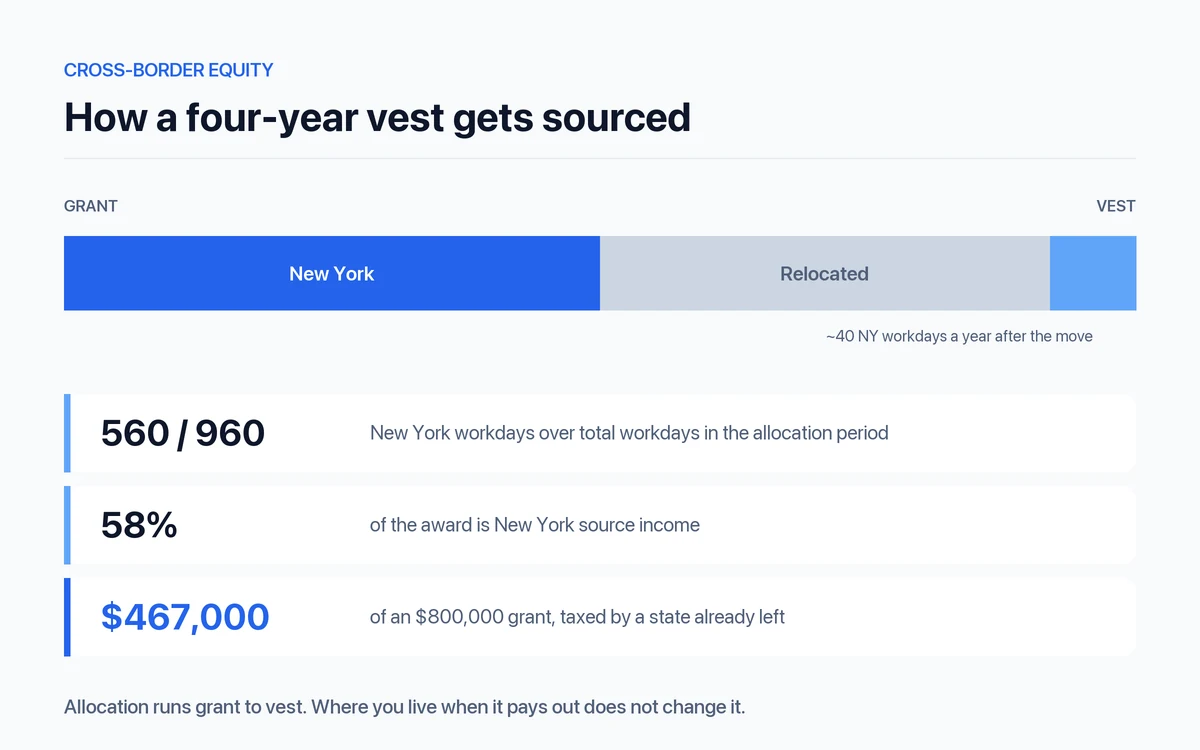
Cross-Border Equity Compensation: Why Your RSUs Don't Relocate When You Do
Move states or countries mid-vest and your former jurisdiction keeps a claim on the grant. How workday allocation sources RSUs and stock options.
Aug 25, 2026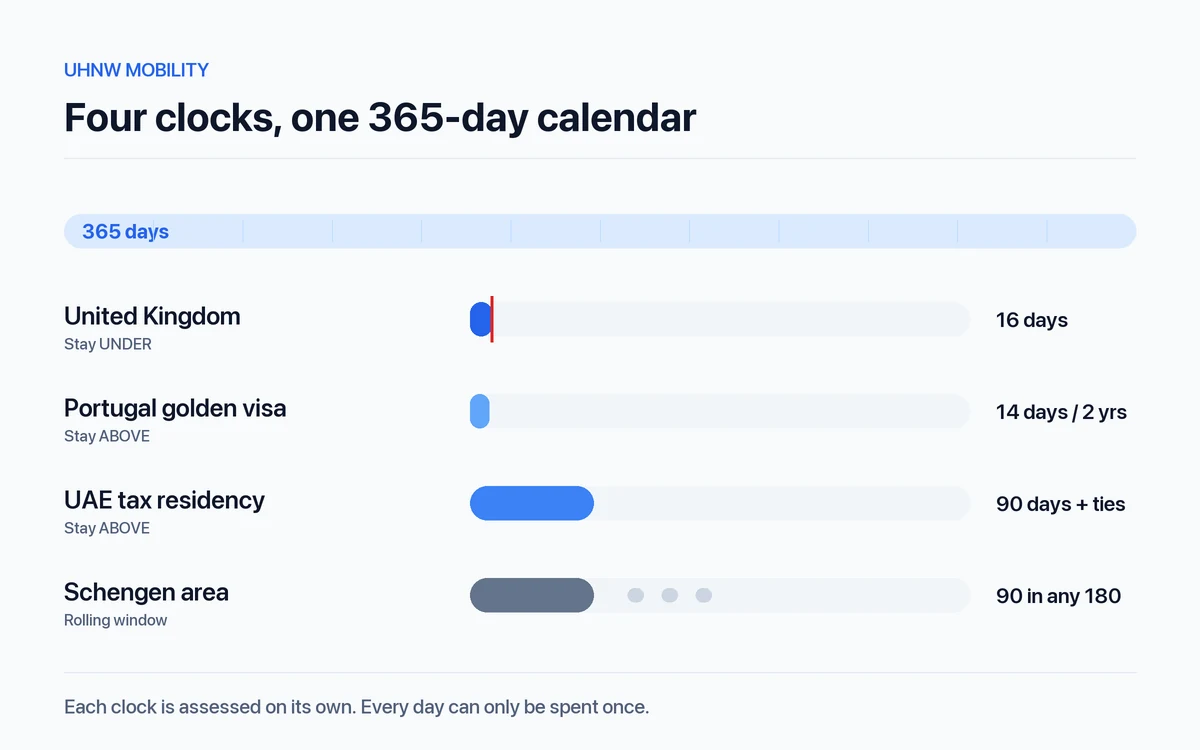
UHNW Tax Residency in 2026: Four Clocks, One 365-Day Calendar
Golden visa minimums, a UK tie table and the exit tax all draw on the same 365 days. Why UHNW residency positions fail on arithmetic, not strategy.
Aug 25, 2026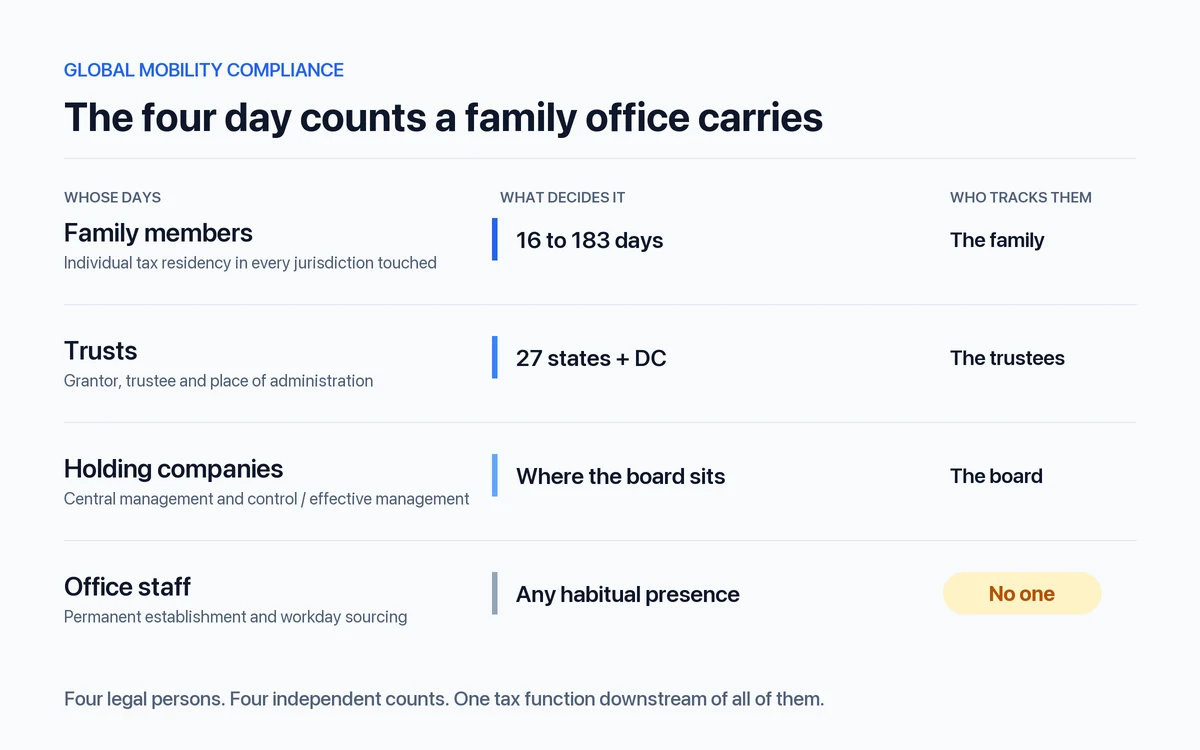
Global Mobility Compliance for Family Offices: The Four Day Counts Nobody Owns
A family office tracks every basis point and nobody's days. The four residency day counts a single-family office actually carries, and who should own each.
Aug 25, 2026Passport Stamps Are Disappearing. Here Is How to Prove Where You Were in 2026
Biometric borders replaced ink stamps, and governments now track your movements better than you do. What counts as evidence in 2026, and what survives an audit.
Aug 7, 2026US Naturalization in 2026: Physical Presence and Continuous Residence Are Two Different Tests
Naturalization needs 913 days present over five years — and continuous residence, which one six-month trip breaks. You can pass one and fail the other.
Aug 7, 2026The Digital Nomad Visa Tax Trap: Why Your Visa Does Not Exempt You in 2026
A digital nomad visa almost never exempts you from local tax. Cross 183 days and most countries claim your worldwide income, at rates up to 48 percent.
Aug 7, 2026Canadian Snowbirds in 2026: The 30-Day Registration Rule and the Tax Trap Behind It
Canadians in the US 30+ days must register with USCIS — and it does nothing to stop US tax residency. How the Substantial Presence Test catches snowbirds.
Aug 7, 2026The UK Statutory Residence Test in 2026: Now That Non-Dom Is Gone, Your Day Count Is Everything
With the non-dom regime gone, the Statutory Residence Test is the only way to keep foreign income outside UK tax. How the SRT works and why test order matters.
Aug 7, 2026Canada's 730-Day Rule in 2026: How PRs Lose Status Without Realising It
Canadian PRs need 730 days present in every rolling five-year window. How the window works, which days count, and how status is lost without one long absence.
Aug 7, 2026The Schengen 90/180 Rule in 2026: How the Entry/Exit System Changed Everything
The EU Entry/Exit System went live 10 April 2026, counting your Schengen days biometrically. How 90/180 actually works, what EES changed, and when ETIAS lands.
Aug 7, 2026
Washington's New 9.9% Millionaires' Tax Is Official: The 2028 Deadline That Has High Earners Planning Their Exit
Washington's 9.9% millionaires' tax survived its court challenge. Here's the 2028 deadline, who it hits, and how to exit cleanly before it takes effect.
Jun 7, 2026
Leaving Maryland in 2026? The New 6.5% Top Bracket, 2% Capital Gains Surtax, and 9.8% Combined Rate That Are Driving High Earners Out
Maryland's 2026 tax overhaul created two new high-earner brackets (6.25% and 6.5%), a 2% capital gains surtax, and a combined state plus local top rate of 9.8%. Learn how to legally change Maryland residency, what the Comptroller looks at in audits, and how to document your move.
May 19, 2026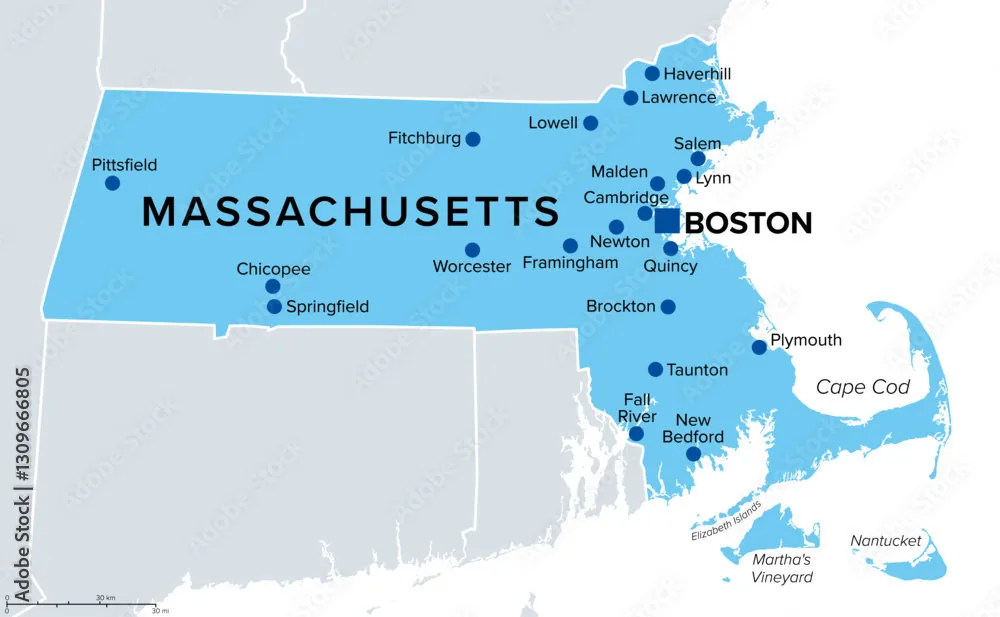
Leaving Massachusetts in 2026? How the DOR Tracks Former Residents, the 9% Millionaire's Tax, and What It Actually Takes to Leave
Leaving Massachusetts? How the DOR tracks former residents, what the 9% millionaires' tax changes in 2026, and the records that make your move stick.
May 9, 2026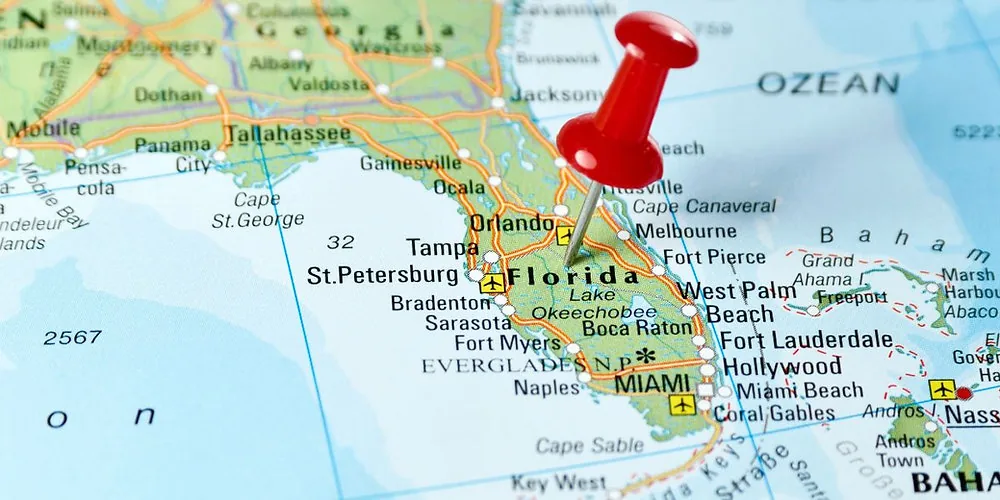
How to Establish Florida Residency for Tax Purposes: The Complete 2026 Guide for High-Income Movers, Snowbirds, and Remote Workers
Learn how to establish Florida residency for tax purposes in 2026. This guide helps high-income movers with Florida residency to save money.
Apr 26, 2026
The Estate Tax Domicile Trap: How 12 States Can Still Tax Your Heirs Even After You've "Left", and What It Actually Takes to Escape
12 states can still tax your estate years after you move away. How the domicile trap catches your heirs, and what it actually takes to escape it.
Apr 22, 2026
Leaving New York: Navigating Taxes & Residency Audits | 2026 Guide
Discover how New York Taxes impact former residents & learn what it takes to prove you've left. Navigate New York Taxes with our 2026 guide.
Apr 14, 2026
New State Safe Harbor Rules for 2026: Which States Changed Their Tax Rules for Remote Workers and Business Travelers
New 2026 safe harbor rules let you work in some states for 30 days tax-free. Learn which states changed, which still tax from day one, and how to track your days.
Apr 9, 2026
Moving to Puerto Rico for Act 60 Tax Benefits? The 183-Day Presence Test That Makes or Breaks Your Exemption (2026 Guide)
Struggling to meet Puerto Rico's 183-day presence test for Act 60? This 2026 guide breaks down exactly what counts, common mistakes that trigger audits, and how to track your qualifying days to secure your tax exemption.
Apr 8, 2026
Leaving California? How the FTB Tracks You Down and What You Need to Prove You Actually Left (2026 Guide)
The FTB doesn't take your word for it when you leave California. How residency audits actually work, what auditors check, and the records that prove you left.
Apr 6, 2026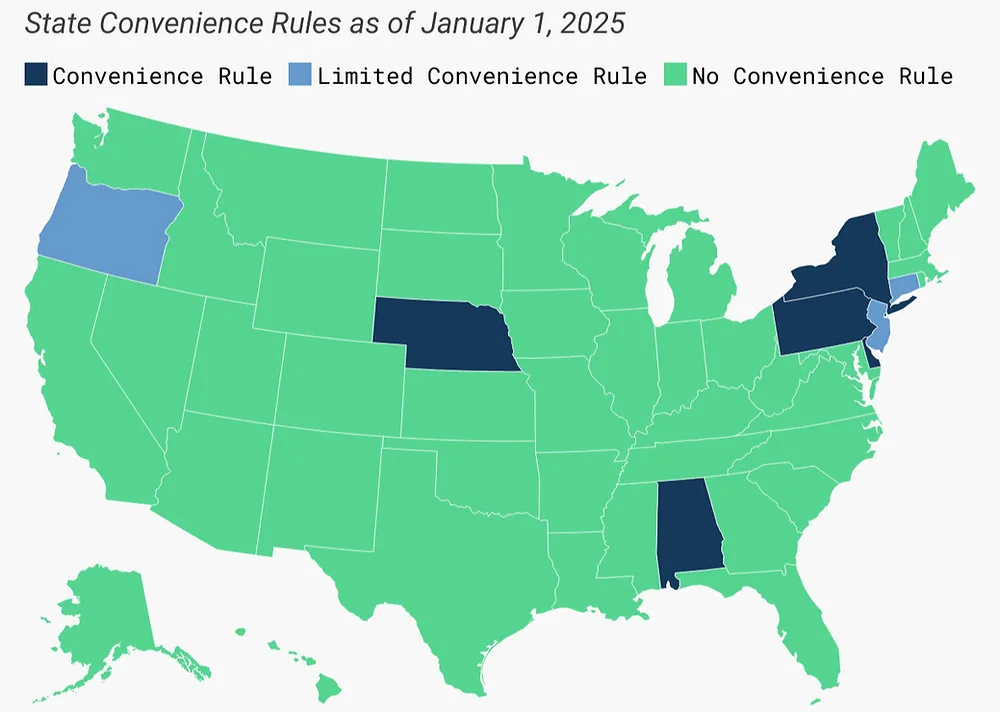
7 States Can Tax You Even If You Never Set Foot There: The Convenience of the Employer Rule Explained for 2026
Working remotely from Florida for a New York company? You may still owe New York state income tax. Learn which 7 states enforce the convenience of the employer rule in 2026, how it affects remote workers, and how iReside helps you document your work location for audit defense.
Mar 31, 2026
The $132,900 Question: Physical Presence Test vs. Bona Fide Residence Test, and Which FEIE Method Saves Expats More Money
Discover which FEIE method saves expats more in 2026. Compare the Physical Presence Test and Bona Fide Residence Test for optimal FEIE benefits.
Mar 31, 2026
How States Are Using Your Smart Meter and Cell Phone Data to Prove You Didn't Really Move: Tax Residency Audits in 2026
Discover how 'Tax Residency Audit' uses smart meter & cell phone data to challenge your residency claims. Stay informed about 'Tax Residency Audit' in 2026.
Mar 31, 2026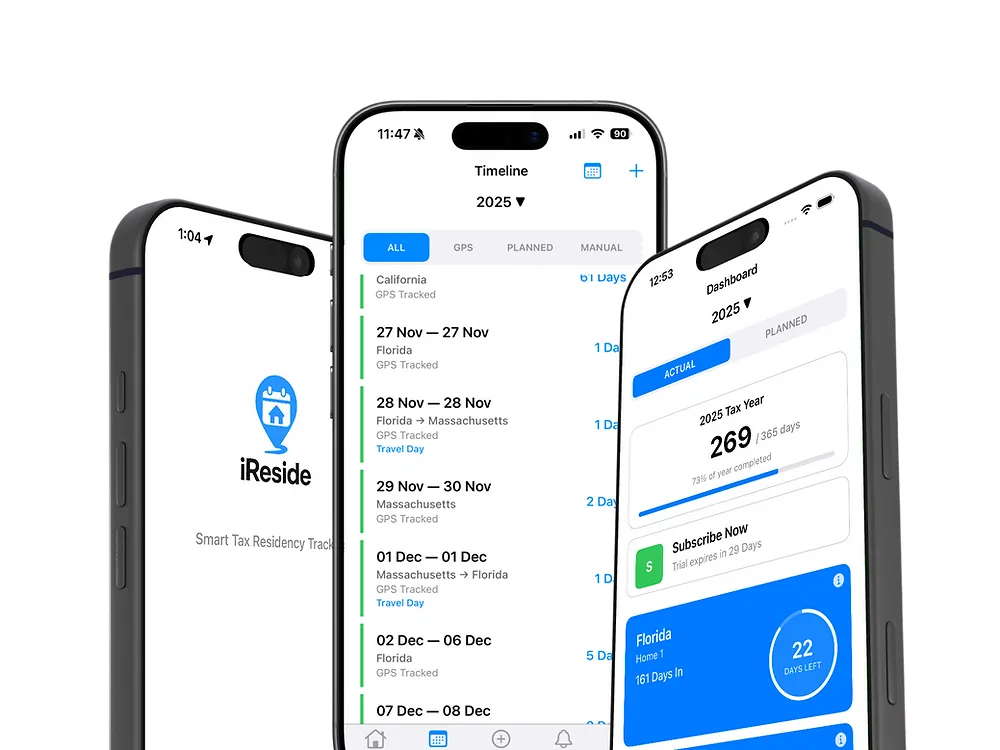
Best TaxDay Alternative 2026 | Why Users Are Switching to iReside
Looking for a TaxDay alternative? Compare TaxDay vs iReside: automatic GPS tracking, lower price, audit-ready reports, and a web dashboard. See why users are switching.
Mar 29, 2026
The 183-Day Rule Explained: Every State's Threshold
Which states use the 183-day rule? How do they count days? What triggers an audit? State-by-state breakdown with the exceptions you need to know.
Mar 29, 2026
How to Maintain Florida Residency for Tax Purposes | 2026 Guide
Already a Florida resident? Learn the ongoing steps to protect your tax-free status, avoid residency audits from your former state, and keep your domicile bulletproof.
Mar 26, 2026
NYC Resident Traveling for Work? The Multi-State Tax Problem You Need to Know
If you live in NYC and travel to other states for work, you may owe taxes in every state you visit. How income allocation works, which states tax from day one, and how to track your days.
Mar 22, 2026
Live in NJ, Work in NYC? Here's How Your Taxes Actually Work
You owe taxes to both states. How the NJ resident credit works, what the convenience of employer rule means, and how hybrid workers avoid the 183-day trap.
Mar 22, 2026
The 183-Day Rule Explained: A Complete Guide to Tax Residency (2026)
The 183-day rule, explained: how the IRS and individual states actually count days for tax residency in 2026, and the documentation mistakes that trigger audits.
Mar 20, 2026
Best App for International Tax Residency Tracking
The best apps for tracking international tax residency in 2026, compared. Why iReside counts every day by GPS, with audit-ready proof for expats and nomads.
Mar 16, 2026
Best App for Tracking State Residency for Tax Purposes (2026) | iReside
Side-by-side comparison of iReside, TaxBird, TaxDay, Domicile365, and Days Monitor. GPS tracking, pricing, audit-ready reports, and which app is worth it.
Mar 16, 2026
What Proves Residency in NC? Documents, Day Counts & How iReside Helps
NC residency requirements for tax purposes. What documents prove residency, how the 183-day rule applies, and what to know if you split time between states.
Mar 16, 2026
Texas Residency Requirements for Tax Purposes
How to establish Texas residency and stop paying income tax to your former state. Requirements, timeline, what triggers audits, and how to document it.
Mar 8, 2026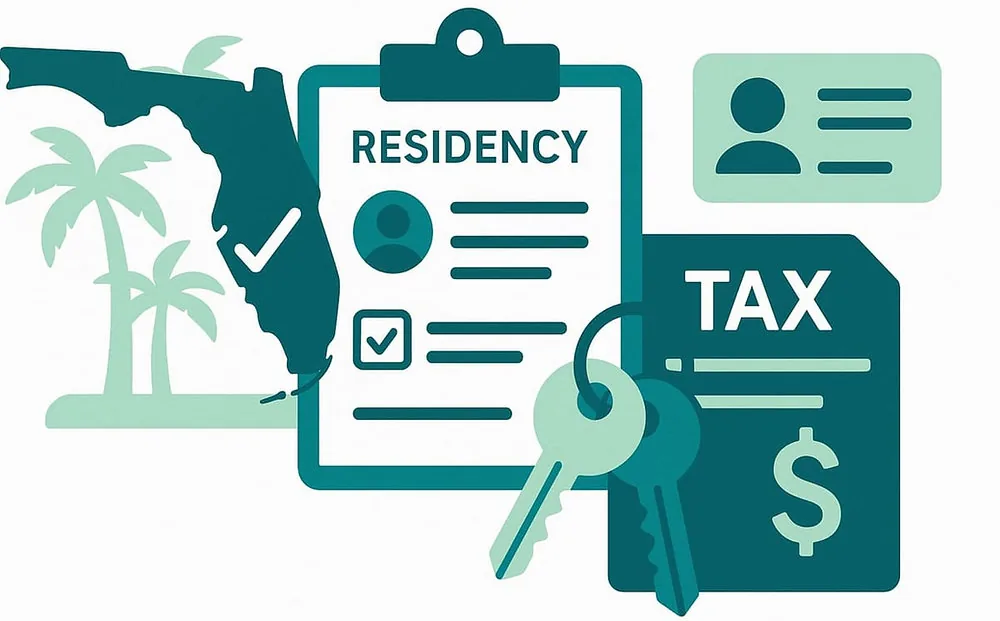
What is the Meaning of a Tax Resident?
Discover the true meaning of a Tax Resident and how it impacts your financial obligations. Learn how tax residency is determined and why it matters.
Mar 7, 2026
Tax Residency Requirements
Discover the ins and outs of tax residency requirements in this comprehensive guide. Learn how tax residency requirements impact your status.
Mar 5, 2026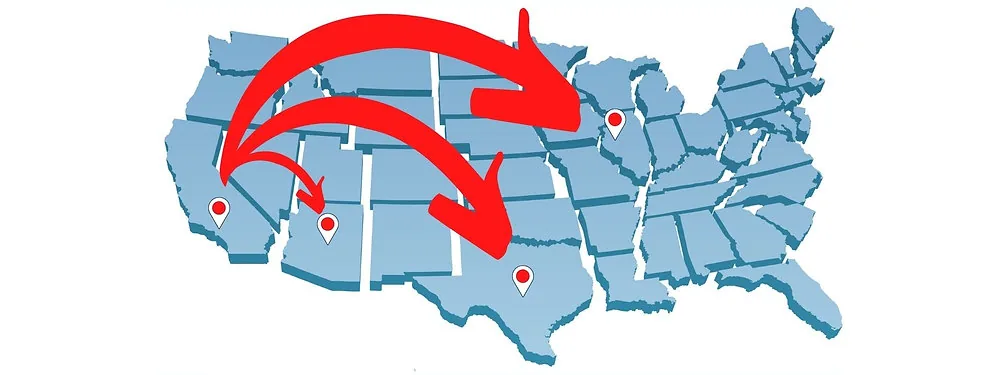
How to Determine State Residency for Tax Purposes
Learn how to determine state residency for tax purposes with our comprehensive guide. Avoid costly mistakes by understanding state residency rules.
Mar 5, 2026
International Tax Residency Rules: How the 183-Day Rule Works Globally
Tax residency rules vary by country. Learn how the 183-day rule applies internationally, what expats and digital nomads need to know, and how to avoid double taxation.
Mar 2, 2026
State Tax Residency Audit: What Happens and How to Prepare
High-tax states like New York and California aggressively audit former residents. Learn what triggers a residency audit, what evidence they review, and how to be ready.
Mar 2, 2026
9 States With No Income Tax in 2026 (Complete List)
Florida, Texas, Nevada, Wyoming, and more. What you actually save by moving, how to establish residency, and the tax traps to avoid.
Mar 2, 2026
How to Track Tax Residency Days: A Step-by-Step Guide (2026)
Need to track your days for state or international tax residency? This guide covers what counts as a day, which records to keep, and the best ways to track automatically.
Mar 2, 2026
Remote Workers: Which State Is Taxing Your Income? The Complete 2026 Multi-State Tax Guide
Working remotely from a different state than your employer? You may owe taxes in both. Learn the 2026 multi-state tax rules, convenience of the employer trap, reciprocity agreements, and how to avoid double taxation as a remote worker, hybrid employee, or digital nomad.
Feb 18, 2026
Snowbird Tax Guide: Avoid Getting Taxed in Two States
Spending winters in Florida? How the 183-day rule works for snowbirds, what triggers a residency audit, and how to protect your tax-free status.
Feb 18, 2026
The 183-Day Rule Explained: Why Tax Residency Tracking Matters
ax residency tracking is no longer optional in 2026. Learn the 183-day rule, how aggressive states like New York and California audit your days, what evidence wins (and loses) a residency audit, and why automated GPS day tracking is the single most effective tax move you can make this year.
Feb 18, 2026
How to Establish Florida Residency for Tax Purposes (2026)
Complete checklist for establishing Florida residency and escaping state income tax. Driver's license, Declaration of Domicile, homestead, and audit traps.
Feb 18, 2026